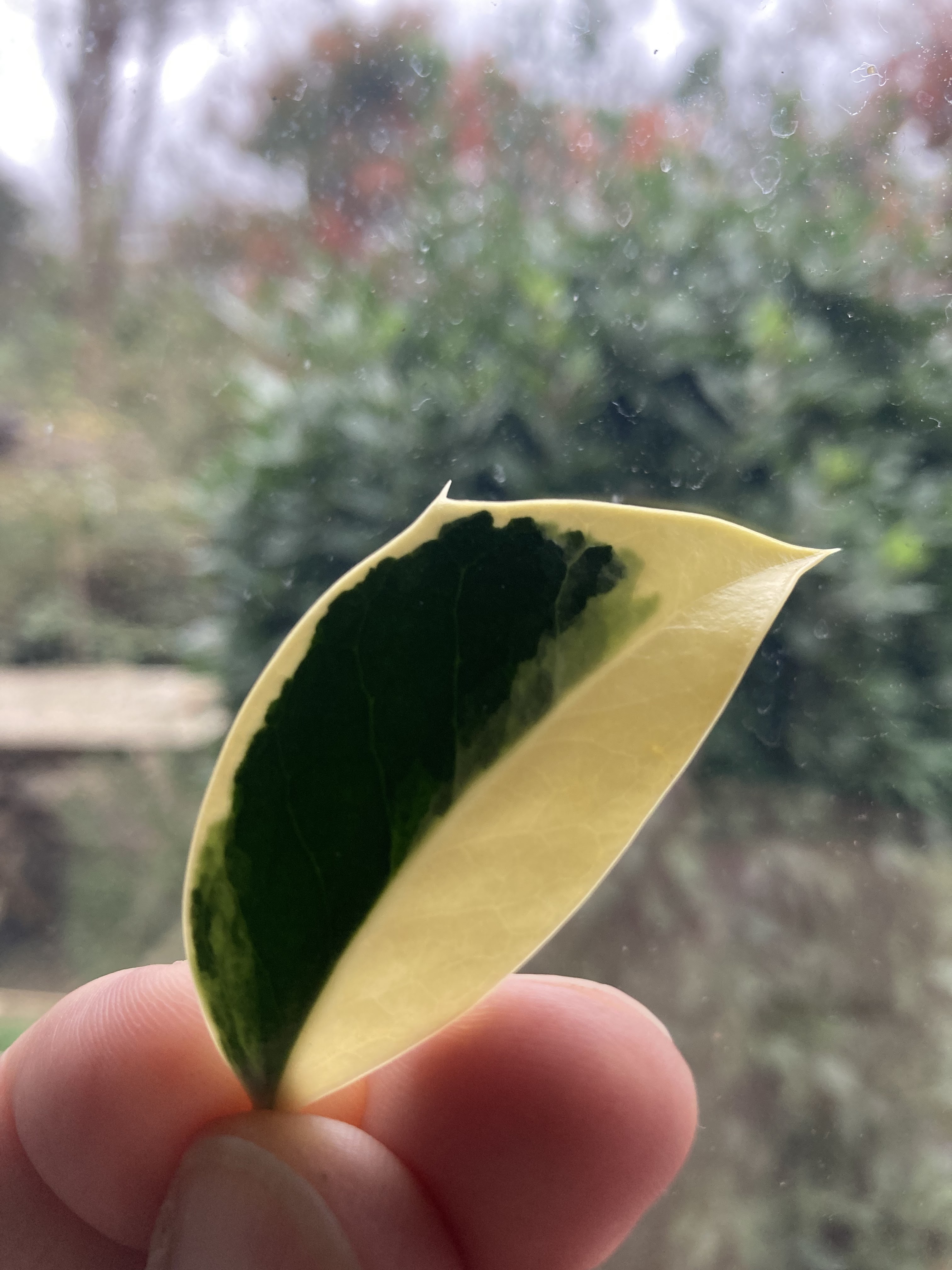
We'll look at Holly in this blogpost and Ivy in the next.


Superstition, magic and myth surround the Holly tree. The Druids, Celts and Romans brought evergreens into their homes during winter - the idea was to bring Nature through the darkest part of the year to re-emerge in spring for another year’s fertility. In times past, a boy in a suit of holly leaves and a girl in ivy, paraded around the village.


.jpg)


People brought holly into the house for other reasons too. Sometimes it was to protect the home from malevolent faeries. It was also to allow faeries to shelter in the home without friction between them and the human occupants. In pagan times, Holly was thought to be a male plant and Ivy female. One old tradition from the Midlands says that whichever plant enters the house first in winter will dictate whether the males or females rule the home for the following year – although bringing either inside before Christmas Eve is again said to be unlucky. Prior to Victorian times the term ‘Christmas tree’ actually referred to Holly. However, before considering it as an alternative to the now traditional fir tree, remember that it’s considered bad luck to cut down a whole Holly tree.

Christianity adopted the Holly as a symbol of Christ’s crown of thorns - which is why the Christmas carol The Holly and the Ivy has the line 'Of all the trees that are in the wood, the holly wears the crown'. The crimson berries are also supposed to represent drops of his blood and the evergreen leaves are a metaphor for life after death. Of course, the crucifixion is more associated with Easter than with Christmas but, as with many other pagan festivals, the tradition of decking the halls with protective boughs of Holly was absorbed into Christian tradition.

John Leech's influential 1843 drawing of the Ghost of Christmas Present that appeared in the first edition of Charles Dickens' novella 'A Christmas Carol'. The figure draws on the older tradition of the Holly King - note the crown of Holly and the green robes.
In Celtic mythology the Holly King ruled over the half of the year from the summer to the winter solstice. At this time the Oak King defeated the Holly King to rule for the time until the summer solstice again. These two aspects of the Nature God were later incorporated into Mummers’ plays performed around Yuletide. The Holly King was depicted as a powerful giant of a man covered in holly leaves and branches, and wielding a Holly bush as a club. The Green Knight of Arthurian legend may have been based on this same archetype. In this tale Gawain rose to the Green Knight’s formidable challenge during the Round Table’s Christmas celebrations. However the folklore of the Holly is not solely connected with Yuletide festivities.
'But the hue of his every feature
Stunned them: as could be seen,
Not only was this creature Colossal,
He was bright green.
No spear to thrust,
No shield against the shock of battle,
But in one hand a solitary branch of holly
That shows greenest when all the groves are leafless'.
from ‘Sir Gawain and the Green Knight’ ca. 1370 – 1390, author unknown
As mentioned above, people believed that Holly had protective properties. Bushes were often left uncut in hedges when these were trimmed. A more arcane reason for this was to obstruct witches who people believed ran along the tops of hedges. More practically farmers used their distinctive evergreen shapes to establish lines of sight during winter ploughing. The Duke of Argyll even had a prospective road rerouted to avoid cutting down a distinctive old holly in 1861.
Holly leaves also proved to be particularly nutritious as winter feed for livestock. Some farmers even installed grinders to make the pricklier leaves more palatable. Holly was an important element in deer parks and old hunting estates – and the name holly still survives in modern place names such as Hollins, Holm Hodder, Hollyoaks and Hollywood – and were important for winter food. In the New Forest, in southern England, Holly is still cut down for the ponies to graze on.
.jpg)
Coppicing also allowed the Holly’s hard, white, close-grained wood to be used for inlaid marquetry and to make chess pieces and tool handles. Folklore suggested that the wood had an affinity for control, especially of horses. Most whips for ploughmen and horse-drawn coaches were made from coppiced Holly, which accounted for hundreds of thousands of stems during the eighteenth century. As well as its decorative uses, Holly wood burns hot and long, making it a perfect fire fuel on cold, winter nights.
Holly trees were traditionally planted near houses to offer protection from lightning. European mythology associated Holly with thunder gods such as Thor and Taranis. We now know that the spines on Holly leaves can act as miniature lightning conductors, thereby protecting the tree and other nearby objects. Science occasionally catches up with old country lore!
Holly and Ivy are often linked together at Christmas.
But more on that in the next blogpost.